


Vertigo: Cervicogenic Dizziness and BPPV
There are two types of vertigo we manage most often in this office: cervicogenic dizziness and benign paroxysmal positional vertigo (BPPV). They have different causes and different treatments, so getting the right diagnosis matters more than almost anything else in resolving this.
Your brain establishes its sense of balance from three inputs: your inner ear, your eyes, and pressure sensors lining the joints of your upper neck. Dizziness or vertigo happens when one of these systems sends your brain information that conflicts with the other two.
Cervicogenic Dizziness
When one of the joints in your neck becomes abnormally restricted, its position-sensing receptors can send your brain inaccurate information about head position — even though your inner ear and eyes are reporting normally. This sensory mismatch produces cervicogenic dizziness: a sense of light-headedness, floating, or general unsteadiness that is different in character from the true “spinning” of BPPV. It commonly develops after whiplash injuries, and can be driven by joint restriction, muscle tightness, disc irritation, or arthritis in the neck.
Typical symptoms:
- Light-headedness, floating, or unsteadiness — rarely true spinning
- Symptoms that come and go, provoked by movement and eased by staying still
- Neck discomfort or stiffness alongside the dizziness
- A headache that may begin near the base of the skull
Tell us right away if you notice a severe or different headache, history of head injury or loss of consciousness, frequent unexplained falls, hearing loss, ringing in the ears, ear fullness, facial or arm numbness, visual disturbances, difficulty speaking or swallowing, or if you’ve started a new medication — these warrant a different evaluation path.
What the research shows: The evidence base here is genuinely more modest than for BPPV, and we think it’s worth being straightforward about that rather than overstating it. A 2011 systematic review (Lystad et al., published in Chiropractic & Manual Therapies) found moderate evidence supporting manual therapy — particularly spinal mobilization and manipulation — for reducing cervicogenic dizziness. A more recent 2025 systematic review (Casado-Sánchez et al., Journal of Bodywork and Movement Therapies) reached a similar conclusion, finding manual therapy effective for reducing dizziness intensity and improving cervical range of motion across the studies reviewed. The research base is still smaller than we’d like — several reviews note a shortage of high-quality randomized trials specifically on this condition — but the available evidence, combined with what we see clinically, supports conservative chiropractic and manual therapy as a reasonable first-line approach.
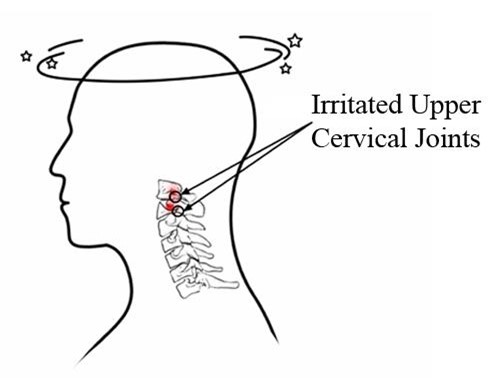
Image on this page provided by ChiroUp.
Benign Paroxysmal Positional Vertigo (BPPV)
BPPV is the most common cause of vertigo. It develops when small calcium carbonate crystals (otoconia) become dislodged and migrate into one of the fluid-filled semicircular canals of the inner ear. Head movement causes the debris to shift, sending your brain a false signal about your head’s position — producing the sudden, spinning sensation.
Typical symptoms:
- Sudden episodes of spinning or dizziness lasting 10 to 20 seconds, triggered by head position changes
- Dizziness on rolling over in bed, bending forward, or looking up, down, or to the side
- Nausea or vomiting with severe episodes
BPPV is diagnosed clinically with the Dix-Hallpike test, and treated with canalith repositioning maneuvers — most commonly the Epley maneuver — which guide the displaced debris back out of the canal through a specific sequence of head and body movements.
What the research shows: A 2014 Cochrane systematic review (Hilton & Pinder) analyzed 11 randomized controlled trials involving 745 patients and found the Epley maneuver significantly more effective than sham treatment or no treatment for resolving posterior canal BPPV. A more recent 2026 network meta-analysis comparing repositioning techniques across 20 RCTs and 2,089 patients found the Epley maneuver ranked highest in overall effectiveness among the available options. Recurrence is a genuine consideration — roughly a third of patients experience BPPV again within a year — but the maneuver itself is fast, safe, and typically produces symptom improvement within hours.
Tell us right away if you notice a severe or different headache, history of head injury or loss of consciousness, frequent unexplained falls, hearing loss, ringing in the ears, ear fullness, facial or arm numbness, visual disturbances, difficulty speaking or swallowing, or if you’ve started a new medication — these warrant a different evaluation path.
What the research shows: The evidence base here is genuinely more modest than for BPPV, and we think it’s worth being straightforward about that rather than overstating it. A 2011 systematic review (Lystad et al., published in Chiropractic & Manual Therapies) found moderate evidence supporting manual therapy — particularly spinal mobilization and manipulation — for reducing cervicogenic dizziness. A more recent 2025 systematic review (Casado-Sánchez et al., Journal of Bodywork and Movement Therapies) reached a similar conclusion, finding manual therapy effective for reducing dizziness intensity and improving cervical range of motion across the studies reviewed. The research base is still smaller than we’d like — several reviews note a shortage of high-quality randomized trials specifically on this condition — but the available evidence, combined with what we see clinically, supports conservative chiropractic and manual therapy as a reasonable first-line approach.
FAQ
How do you tell cervicogenic dizziness apart from BPPV? The character of the dizziness is the biggest clue — cervicogenic dizziness tends to feel more like unsteadiness or floating and is often accompanied by neck stiffness, while BPPV produces true, brief spinning tied specifically to head position changes. The Dix-Hallpike test helps confirm BPPV specifically. We evaluate for both during your visit, since they can occasionally coexist.
Is the Epley maneuver uncomfortable? Some patients find the brief dizziness during the maneuver unpleasant, but it typically lasts only a few minutes, and most people find the relief afterward well worth it. Many patients notice improvement within hours of a single treatment.
Will my vertigo come back after treatment? For BPPV, recurrence is genuinely possible — research suggests roughly a third of patients experience it again within a year — but it responds to repeat treatment the same way. For cervicogenic dizziness, staying consistent with any home exercises and addressing the underlying neck mechanics reduces the likelihood of recurrence.
Do I need imaging before treatment? Not usually. Both cervicogenic dizziness and BPPV are diagnosed clinically through history and specific physical exam tests. Imaging becomes relevant if your presentation includes any of the red-flag symptoms listed above, or if initial treatment doesn’t produce the expected response.
Can physical therapy help alongside chiropractic care? Yes — vestibular rehabilitation exercises, which Kelly incorporates as part of her physical therapy practice, are commonly used alongside manual therapy for both cervicogenic and BPPV presentations, particularly for patients with ongoing balance concerns after the acute dizziness resolves.
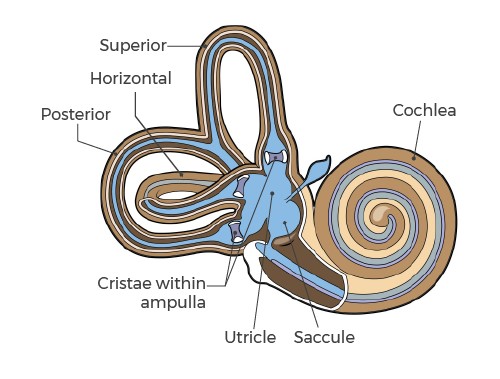
Image on this page provided by ChiroUp.
Coordinated Care, Under One Roof
Chiropractic, physical therapy, acupuncture, and massage therapy are coordinated under one roof with the rest of your treatment plan rather than operating in isolation. Schedule your appointment to get started.